Pepper Jack Cheese
Pepper Jack Cheese: A Spicy Twist on a Classic Favorite
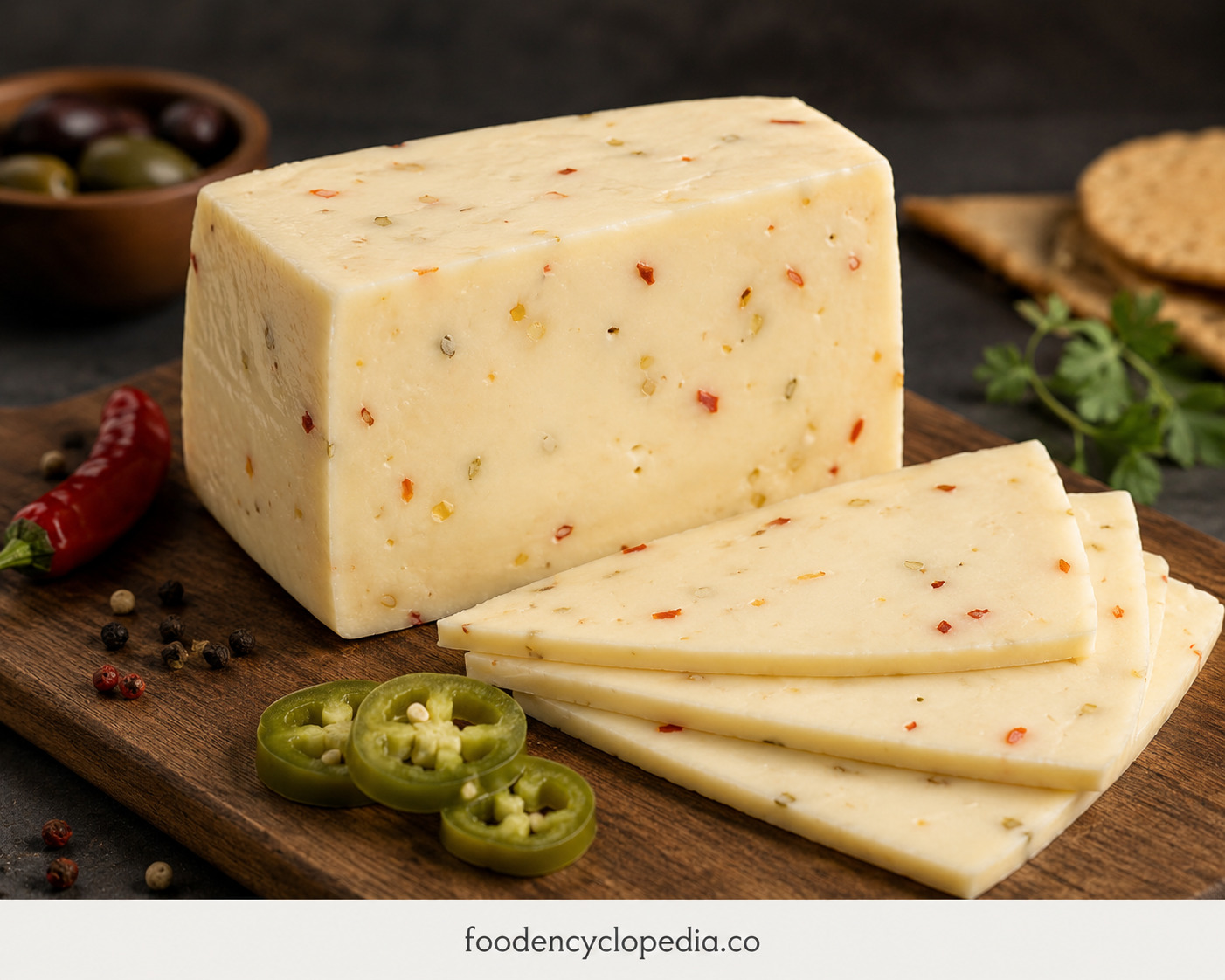
Pepper Jack Cheese is a flavorful semi-soft cheese that combines the creamy, mild characteristics of Monterey Jack with the bold heat of spicy peppers. Known for its smooth texture and distinctive specks of jalapeños, habaneros, bell peppers, and other seasonings, Pepper Jack has become a popular choice for sandwiches, burgers, nachos, quesadillas, and cheese boards. Its unique balance of richness and spice makes it a favorite among cheese lovers looking for an extra kick of flavor.
Originating in the United States, Pepper Jack evolved from traditional Monterey Jack cheese, which was first developed in California during the 18th century. Cheesemakers began adding peppers and spices to Monterey Jack to create a more vibrant and versatile cheese that could complement a wide range of dishes. Today, Pepper Jack is widely produced and enjoyed worldwide for its creamy consistency and spicy profile.
How Pepper Jack Cheese Is Made
The production of Pepper Jack Cheese follows a process similar to that of Monterey Jack cheese, with the addition of peppers during the cheesemaking stage.
1. Milk Preparation
Fresh cow’s milk is collected, pasteurized, and standardized to achieve the desired fat content. The milk is then warmed to an ideal temperature for cheesemaking.
2. Starter Culture Addition
Beneficial bacterial cultures are added to the milk. These cultures convert lactose into lactic acid, helping develop the cheese’s flavor and texture.
3. Coagulation
Rennet, a natural enzyme, is introduced to coagulate the milk. Within about 30 to 45 minutes, the milk solidifies into a gel-like curd.
4. Cutting the Curds
The curd is cut into small cubes, allowing whey (the liquid portion) to separate. The curds are gently stirred and heated to achieve the characteristic semi-soft texture.
5. Adding Peppers and Seasonings
Finely chopped jalapeños, chili peppers, habaneros, sweet peppers, or other spices are mixed evenly throughout the curds. This step gives Pepper Jack its distinctive spicy flavor and colorful appearance.
6. Draining and Pressing
The whey is drained away, and the curds are placed into molds. The cheese is pressed to remove excess moisture and form solid blocks or wheels.
7. Salting
Salt is applied either directly to the curds or through a brining process. Salting enhances flavor, controls moisture, and helps preserve the cheese.
8. Aging
Pepper Jack is typically aged for a relatively short period, usually between one and four months. During this time, the cheese develops its smooth, creamy texture while allowing the pepper flavors to integrate fully.
Flavor and Culinary Uses
Pepper Jack Cheese offers a mild buttery taste followed by a pleasant spicy finish. Its excellent melting properties make it ideal for:
- Burgers and sandwiches
- Quesadillas and tacos
- Nachos and dips
- Macaroni and cheese
- Grilled cheese sandwiches
- Cheese platters and appetizers
Because it melts smoothly while retaining its peppery character, Pepper Jack is often chosen by chefs and home cooks seeking to add both creaminess and heat to recipes.
Conclusion
Pepper Jack Cheese is a delicious fusion of creamy Monterey Jack and spicy peppers, delivering a distinctive flavor that enhances countless dishes. Its straightforward production process, combined with carefully selected peppers and a short aging period, results in a versatile cheese that remains a favorite in kitchens around the world. Whether melted over a burger or enjoyed on its own, Pepper Jack offers the perfect combination of richness, smoothness, and spice.