Arrabbiata Sauce
Arrabbiata Sauce: The Authentic Italian “Angry” Tomato Sauce Recipe (2026 Guide)
Meta Description: Learn how to make authentic Italian arrabbiata sauce from scratch. This easy 25-minute recipe delivers bold, garlicky, spicy tomato flavor — perfect for penne, pizza, and more.
What Is Arrabbiata Sauce?
Arrabbiata sauce (sugo all’arrabiata in Italian) is a classic spicy tomato sauce that originated in Rome, Italy. The word arrabbiata literally translates to “angry” — a fitting name for a sauce that packs a fiery punch from red chili peppers.
Unlike its milder cousin marinara, arrabbiata sauce is defined by its bold heat, intense garlic flavor, and rich tomato base. It’s one of the simplest yet most satisfying sauces in Italian cuisine, requiring just a handful of pantry staples and about 25 minutes of cooking time.
The History and Origins of Arrabbiata Sauce
Arrabbiata sauce hails from the Lazio region of Italy, specifically Rome. It belongs to the tradition of sugo di pomodoro — quick-cooking tomato sauces that showcase the quality of the ingredients rather than complex technique.
The sauce reflects the Roman philosophy of cucina povera (peasant cooking): transforming humble, affordable ingredients into something extraordinary. With just tomatoes, garlic, olive oil, and chili, arrabbiata proves that great flavor doesn’t require a long shopping list.
Key Ingredients for Authentic Arrabbiata Sauce
The beauty of arrabbiata lies in its simplicity. Here’s what you need:
| Ingredient | Why It Matters | Pro Tip |
|---|---|---|
| San Marzano Tomatoes | Grown in volcanic soil near Naples; naturally sweet and low in acidity | Look for the DOP label for certified authenticity |
| Extra Virgin Olive Oil | Forms the flavor base; quality matters immensely | Use a good, fruity Italian EVOO |
| Fresh Garlic | Provides the signature aromatic backbone | Always mince fresh — avoid jarred pre-minced garlic |
| Red Pepper Flakes (Peperoncini) | Delivers the “angry” heat that defines the sauce | Start with 1–2 tsp and adjust to taste |
| Fresh Basil | Adds brightness and herbal complexity | Tear leaves by hand and add at the end |
Ingredient Notes:
- Tomatoes: Canned crushed tomatoes are ideal for a thick, clingy sauce. If using whole San Marzanos, crush them by hand or with a masher for a rustic texture.
- Chili Heat: Traditional Italian recipes use peperone friariello or cayenne peppers. If unavailable, red pepper flakes or Calabrian chili peppers work beautifully.
- Optional: A small pinch of sugar can balance acidity, though many purists skip it when using high-quality sweet tomatoes.
How to Make Authentic Arrabbiata Sauce: Step-by-Step
This recipe yields about 3 cups of sauce (enough for 1 pound of pasta) and takes roughly 25 minutes from start to finish.
Ingredients:
- 3 tbsp extra virgin olive oil
- 1 medium onion, finely chopped
- 4 cloves garlic, minced
- 2 tsp crushed red pepper flakes (adjust to taste)
- 1 tsp dried oregano
- 2 tbsp tomato paste
- 1 (28 oz) can crushed San Marzano tomatoes
- 1½ tsp kosher salt
- ½ tsp sugar (optional)
- Fresh basil leaves, torn
- Freshly ground black pepper
Instructions:
Step 1: Sauté the Aromatics
Heat olive oil in a large skillet or saucepan over medium heat. Add the onion and cook until soft and translucent, about 3–4 minutes.
Step 2: Bloom the Garlic and Chili
Add the minced garlic, red pepper flakes, and oregano. Cook for 1–2 minutes until the garlic becomes fragrant and the chili “blooms” in the oil — this step is crucial for releasing the full heat and flavor.
Step 3: Deepen with Tomato Paste
Stir in the tomato paste and cook for about 30 seconds. This caramelizes the paste and removes any raw, tinny flavor.
Step 4: Simmer the Sauce
Add the crushed tomatoes, salt, and sugar (if using). Bring to a simmer, then reduce heat to medium-low. Cover and cook for 15 minutes. If the sauce seems too thin, simmer uncovered for an additional 5–10 minutes until thickened and concentrated.
Step 5: Finish with Fresh Basil
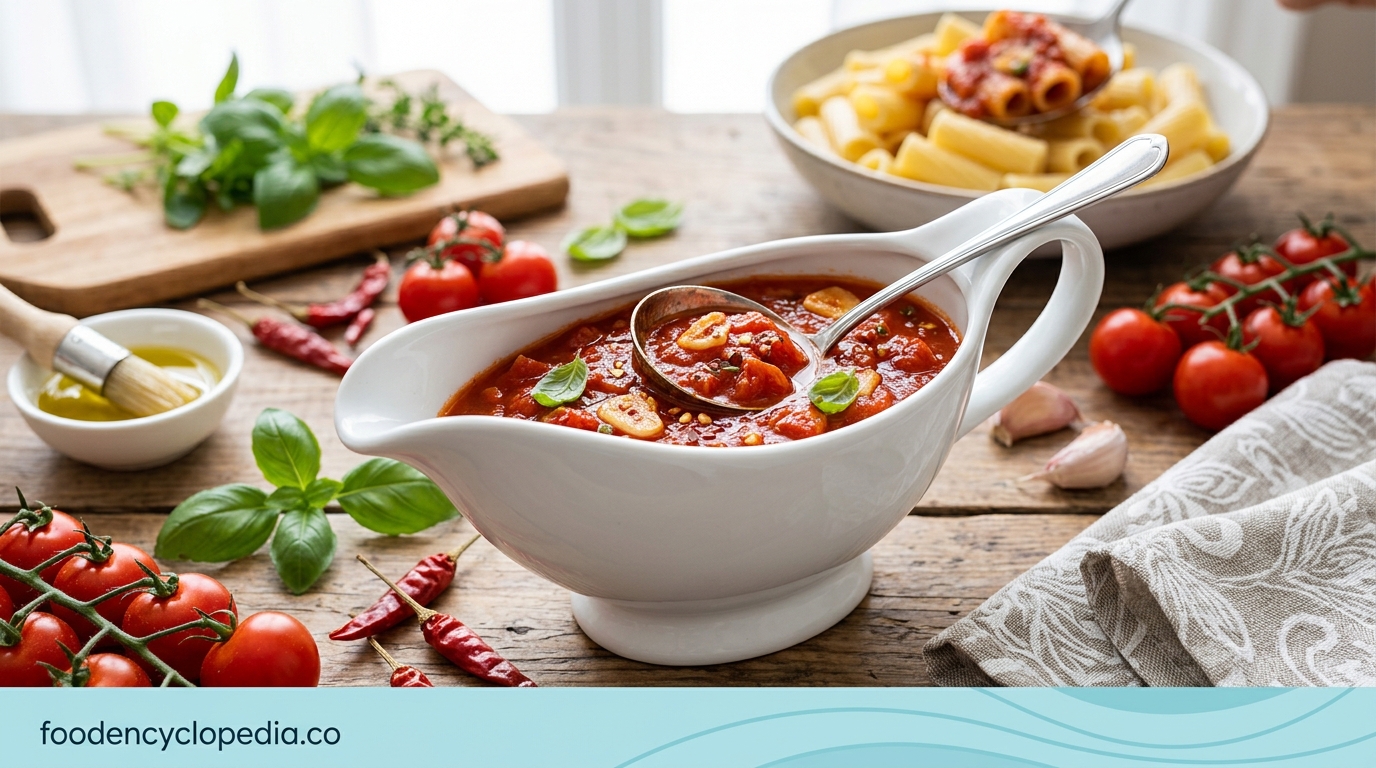
Remove from heat. Stir in torn fresh basil leaves and adjust seasoning to taste. The sauce should be thick enough to cling to pasta, with a vibrant, spicy kick.
Pro Tips for the Best Arrabbiata Sauce
- Don’t Rush the Simmer: While arrabbiata is a quick sauce, allowing it to simmer for 30–45 minutes develops deeper, more complex flavors.
- Use a Wide Pan: A large, wide skillet allows the sauce to reduce faster and more evenly, concentrating the tomato flavor.
- Adjust Heat to Your Taste: Start conservative with the chili flakes — you can always add more, but you can’t take it out. The heat will intensify as the sauce sits.
- Mash for Texture: For a rustic sauce, use a potato masher or wooden spoon to break down the tomatoes as they cook. For a smoother sauce, blend with an immersion blender.
- Toss Pasta IN the Sauce: Never serve naked pasta with sauce dumped on top. Transfer the drained pasta directly into the pan with the sauce and toss over low heat. Add reserved pasta water as needed to create a silky, emulsified coating.
What to Serve With Arrabbiata Sauce
- Penne Rigate: The classic pairing. The ridges and hollow tubes capture the sauce perfectly.
- Rigatoni or Ziti: Other short pasta shapes with ridges work equally well.
- Pizza: Use as a spicy base for homemade pizza.
- Dipping Sauce: Perfect for mozzarella sticks, garlic bread, or breadsticks.
- Protein: Spoon over grilled chicken, sautéed shrimp, or crispy chicken cutlets.
- Polenta: A hearty, comforting base for creamy polenta.
Garnish with: Grated Pecorino Romano or Parmigiano Reggiano, chopped fresh parsley, and an extra sprinkle of red pepper flakes.
Arrabbiata vs. Marinara vs. Amatriciana: What’s the Difference?
| Sauce | Key Characteristics | Contains Meat? |
|---|---|---|
| Arrabbiata | Spicy, garlicky tomato sauce with chili heat | No |
| Marinara | Mild tomato sauce with garlic and herbs | No |
| Amatriciana | Tomato sauce with guanciale (cured pork cheek) and Pecorino | Yes |
The primary difference between arrabbiata and marinara is the spice level — simply omit the red pepper flakes, and you have marinara. Amatriciana, meanwhile, is a heartier, non-vegetarian sauce featuring cured pork.
Storage and Make-Ahead Tips
- Refrigerator: Store in an airtight container for up to 1 week.
- Freezer: Freeze for up to 3–6 months. Let cool completely, then transfer to mason jars (leave headspace for expansion) or freezer-safe containers.
- Meal Prep: Double the batch and freeze half. The flavors actually improve after a day in the fridge as the spices meld.
Frequently Asked Questions
Is arrabbiata sauce very spicy?
It is moderately spicy, but fully customizable. Start with 1 teaspoon of red pepper flakes for a mild version, or go up to 1 tablespoon for serious heat.
Can I make arrabbiata sauce without onion?
Yes — some traditional Roman recipes use only garlic. The onion adds sweetness and body, but it’s not mandatory.
What cheese pairs best with arrabbiata?
Pecorino Romano is the traditional choice — its sharp, salty bite cuts through the spice beautifully. Parmigiano Reggiano is an excellent substitute.
Is arrabbiata sauce vegan and gluten-free?
Yes! Arrabbiata sauce is naturally vegan, gluten-free, dairy-free, and nut-free. Just serve it with your preferred pasta or gluten-free alternative.
Conclusion
Arrabbiata sauce is the ultimate testament to Italian culinary wisdom: extraordinary flavor from ordinary ingredients. With just tomatoes, garlic, olive oil, and chili, you can create a sauce that’s bold, comforting, and endlessly versatile. Whether you’re tossing it with penne for a quick weeknight dinner or using it as a pizza base, this “angry” sauce is sure to become a staple in your kitchen.
Buon appetito!