Tomato Paste
Tomato Paste : What It Is, Why It’s a Kitchen Staple, and How to Make It at Home
Tomato paste is one of the most versatile ingredients in any kitchen. This deep red, concentrated tomato product packs intense umami flavor into every spoonful, making it a foundational ingredient in sauces, soups, stews, and marinades across countless cuisines. Whether you’re a home cook looking to deepen the flavor of your weeknight pasta sauce or a food enthusiast curious about how this pantry essential is made, this guide covers everything you need to know about tomato paste — including a step-by-step method for making your own at home.
What Is Tomato Paste?
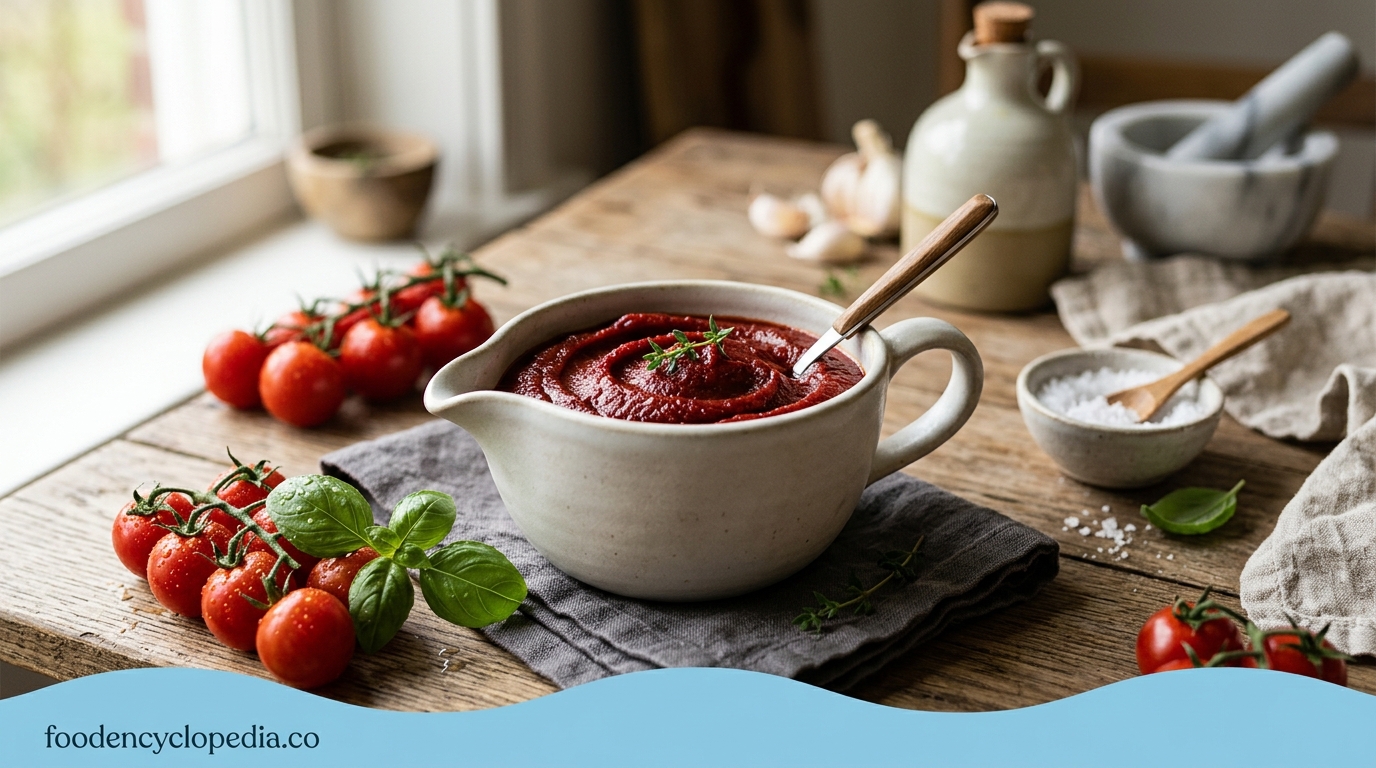
Tomato paste is made by cooking tomatoes for several hours to remove their water content, then straining out the seeds and skins to produce a thick, richly concentrated paste. The result is a product with a much more intense tomato flavor than fresh tomatoes, canned tomatoes, or tomato sauce, since so much of the water has been removed and the natural sugars have caramelized during the long cooking process.
Because it’s so concentrated, tomato paste is typically used in small amounts — often just a tablespoon or two — to boost flavor, add color, and thicken dishes like pasta sauces, chili, curries, and braises.
Why Tomato Paste Is a Pantry Essential
There are several reasons tomato paste has earned a permanent spot in kitchens around the world:
- Concentrated flavor: A small amount delivers a deep, savory tomato taste that would take pounds of fresh tomatoes to replicate.
- Long shelf life: Canned or jarred tomato paste keeps for a long time unopened, and tubes of paste last for weeks in the fridge once opened.
- Natural thickener: Its thick texture helps bind and thicken sauces, stews, and soups without added starches.
- Umami boost: Tomato paste is rich in glutamates, the natural compounds responsible for umami flavor, which is why it’s often used to deepen the savoriness of dishes like Bolognese, chili, and braised meats.
- Versatility: It’s used in Italian, Mediterranean, Middle Eastern, Indian, and American cooking alike, from shakshuka to gumbo to classic marinara.
Tomato Paste vs. Tomato Sauce vs. Tomato Purée
These three tomato products are often confused, but they differ mainly in consistency and concentration:
- Tomato paste is the thickest and most concentrated, with most of the water removed.
- Tomato purée is thinner than paste but thicker than sauce, made from cooked and strained tomatoes without added seasoning.
- Tomato sauce is the thinnest of the three and often includes added seasonings, herbs, or other ingredients, making it ready to use straight from the can.
Knowing the difference helps you choose the right product — and the right quantity — for your recipe.
How to Make Tomato Paste at Home
Making tomato paste from scratch is simple, requires just one ingredient, and results in a fresher, more customizable product than most store-bought versions. Here’s how to do it.
Ingredients
- 4–5 pounds (about 2 kg) ripe tomatoes (Roma or plum tomatoes work best due to their low water content)
- Optional: a pinch of salt and a drizzle of olive oil
Equipment
- Large pot
- Food mill or fine-mesh strainer
- Baking sheet or wide, shallow pan
- Oven (or stovetop, if preferred)
Step-by-Step Instructions
- Wash and core the tomatoes. Remove the stems and any blemished sections. Roughly chop the tomatoes into quarters.
- Cook the tomatoes down. Place the chopped tomatoes in a large pot over medium heat. Cook for 20–30 minutes, stirring occasionally, until the tomatoes soften and release their juices.
- Strain the mixture. Pass the cooked tomatoes through a food mill or fine-mesh strainer to remove the skins and seeds. This step is key to achieving a smooth, silky paste.
- Reduce the purée. Pour the strained tomato liquid into a wide, shallow baking pan or spread it across a baking sheet. Bake at a low temperature (around 275°F/135°C) for 3–5 hours, stirring occasionally, until the mixture thickens into a deep red paste and most of the moisture has evaporated. Alternatively, you can reduce it on the stovetop over low heat, stirring frequently to prevent scorching.
- Season and store. Once the paste reaches your desired thickness, stir in a pinch of salt if desired. Let it cool completely.
- Store properly. Transfer the paste into small, airtight jars or an ice cube tray for easy portioning. Top each portion with a thin layer of olive oil to help preserve it, then refrigerate for up to two weeks or freeze for up to six months.
Tips for the Best Homemade Tomato Paste
- Use ripe, in-season tomatoes for the best flavor and color.
- Roma or plum tomatoes are ideal because they have less water and fewer seeds than beefsteak varieties.
- Stir the mixture periodically during reduction to prevent burning, especially near the edges of the pan.
- Freeze paste in tablespoon-sized portions (an ice cube tray works well) so you can pull out exactly what you need for a recipe.
Common Uses for Tomato Paste
Once you have tomato paste on hand — homemade or store-bought — here are some popular ways to use it:
- Stir into pasta sauces for extra depth and body
- Add to soups and stews as a flavor base
- Mix into marinades and glazes for meat or vegetables
- Use as a base for pizza sauce
- Stir into chili, curries, or braises for richness
- Whisk into salad dressings for a subtle umami note
Final Thoughts
Tomato paste is a small ingredient with an outsized impact on flavor. Understanding what it is, how it differs from similar tomato products, and how it’s made gives you more control over your cooking — whether you’re grabbing a can from the store or making your own batch from scratch. With just tomatoes, time, and a little patience, you can create a fresher, more flavorful version of this pantry staple right in your own kitchen.