Ponzu Sauce
Ponzu Sauce: The Refreshing Japanese Citrus Condiment and How to Make It
Ponzu Sauce is a classic Japanese condiment celebrated for its bright citrus flavor, delicate balance of savory and tangy notes, and remarkable versatility. Made by combining soy sauce with citrus juice and traditional Japanese ingredients, Ponzu has become a staple in Japanese cuisine and is increasingly popular around the world. Its refreshing taste enhances everything from seafood and grilled meats to salads, dumplings, and noodle dishes, making it one of the most versatile sauces in Asian cooking.
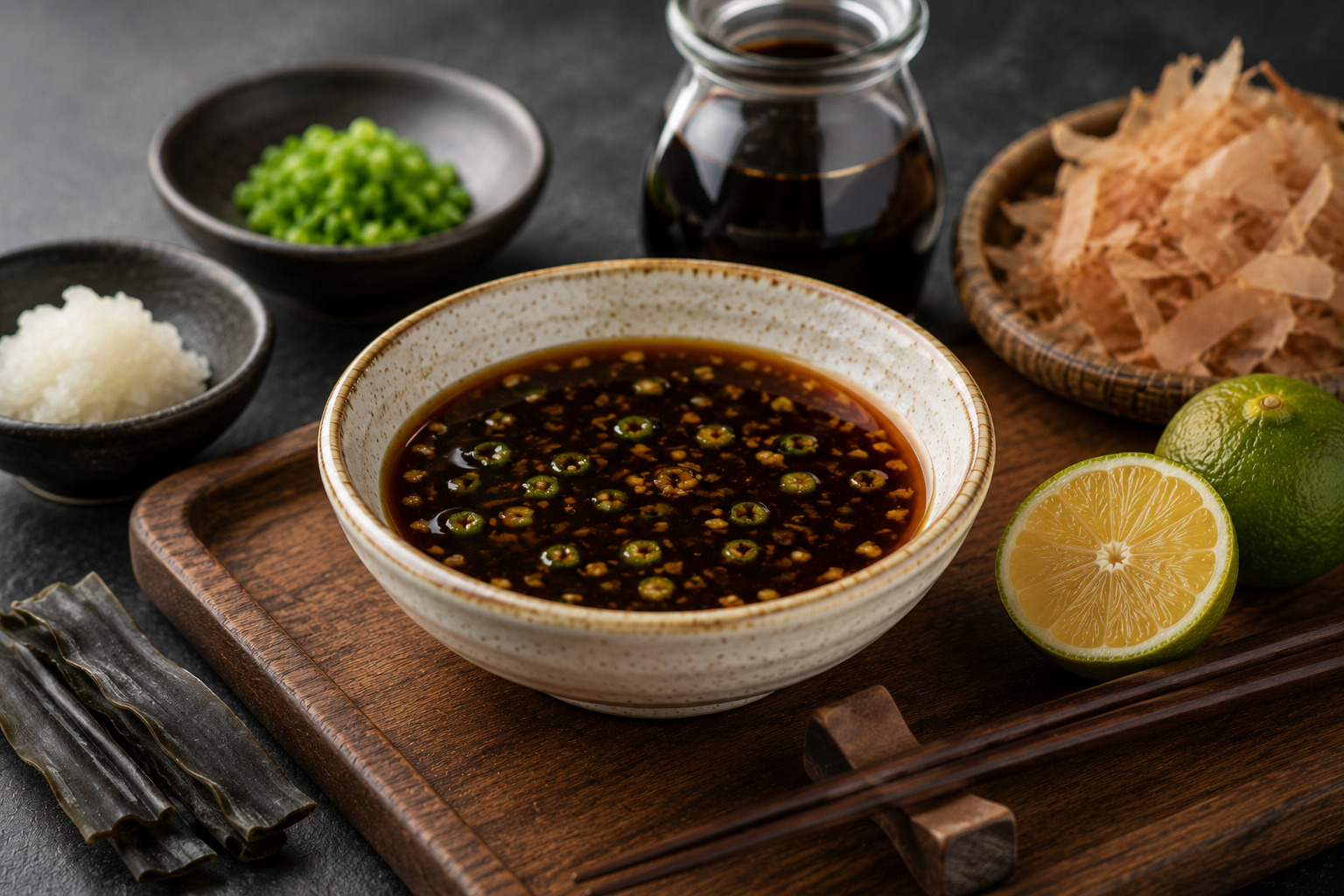
What makes Ponzu Sauce unique is its harmonious blend of umami-rich soy sauce and fresh citrus flavors. Traditionally, Japanese citrus fruits such as yuzu, sudachi, or kabosu are used, although lemon and lime are often substituted in homemade versions. The addition of ingredients like rice vinegar, kombu seaweed, and bonito flakes creates a complex depth of flavor that is simultaneously savory, tangy, slightly sweet, and refreshingly light.
Unlike heavier sauces, Ponzu offers a clean and vibrant flavor profile that complements foods without overpowering them. Its citrus-forward character makes it particularly popular with seafood, sushi, sashimi, hot pot dishes, grilled vegetables, and light salads. As a result, Ponzu Sauce has become an essential ingredient for anyone seeking authentic Japanese flavors.
How to Make Traditional Ponzu Sauce
Homemade Ponzu Sauce is easy to prepare and allows you to customize the balance of citrus, saltiness, and umami according to your preferences.
Ingredients
- ½ cup soy sauce
- ¼ cup fresh lemon juice
- ¼ cup fresh lime juice
- 2 tablespoons rice vinegar
- 1 tablespoon mirin (Japanese sweet rice wine)
- 1 small piece kombu (dried kelp)
- 1 tablespoon bonito flakes (optional)
Instructions
- In a clean glass jar, combine the soy sauce, lemon juice, lime juice, rice vinegar, and mirin.
- Add the kombu and bonito flakes.
- Stir gently to combine all ingredients.
- Cover the jar and refrigerate for 12 to 24 hours to allow the flavors to infuse.
- Strain the sauce through a fine mesh sieve to remove the kombu and bonito flakes.
- Transfer the finished Ponzu Sauce to a clean bottle or airtight container.
- Store in the refrigerator and use as needed.
Tips for the Best Ponzu Sauce
- Use freshly squeezed citrus juice for the brightest flavor.
- Yuzu juice provides the most authentic Japanese taste when available.
- Allow sufficient infusion time for maximum umami depth.
- Adjust the citrus-to-soy ratio according to your preference.
- Store refrigerated and use within two weeks for optimal freshness.
- Shake gently before serving if natural separation occurs.
Popular Uses for Ponzu Sauce
Ponzu Sauce is widely used as a dipping sauce for dumplings, sushi, sashimi, and shabu-shabu hot pot. It also works beautifully as a salad dressing, seafood marinade, or finishing sauce for grilled fish, chicken, and vegetables. Many chefs use Ponzu to add a refreshing citrus accent to modern fusion dishes, rice bowls, and noodle recipes.
Variations and Modern Adaptations
While traditional Ponzu is made with Japanese citrus fruits and soy sauce, modern variations often include orange juice, yuzu concentrate, chili peppers, sesame oil, or additional sweeteners. Some recipes emphasize tanginess, while others highlight umami or sweetness. Gluten-free versions can be made using tamari instead of traditional soy sauce, making Ponzu accessible to a wider range of dietary needs.
With its refreshing citrus character, balanced umami flavor, and exceptional versatility, Ponzu Sauce remains one of Japan’s most beloved condiments. Whether used as a dipping sauce, dressing, marinade, or finishing touch, this bright and flavorful sauce brings authentic Japanese elegance to countless dishes and culinary creations.