Hoisin Sauce
Hoisin Sauce: The Sweet and Savory Asian Condiment and How to Make It
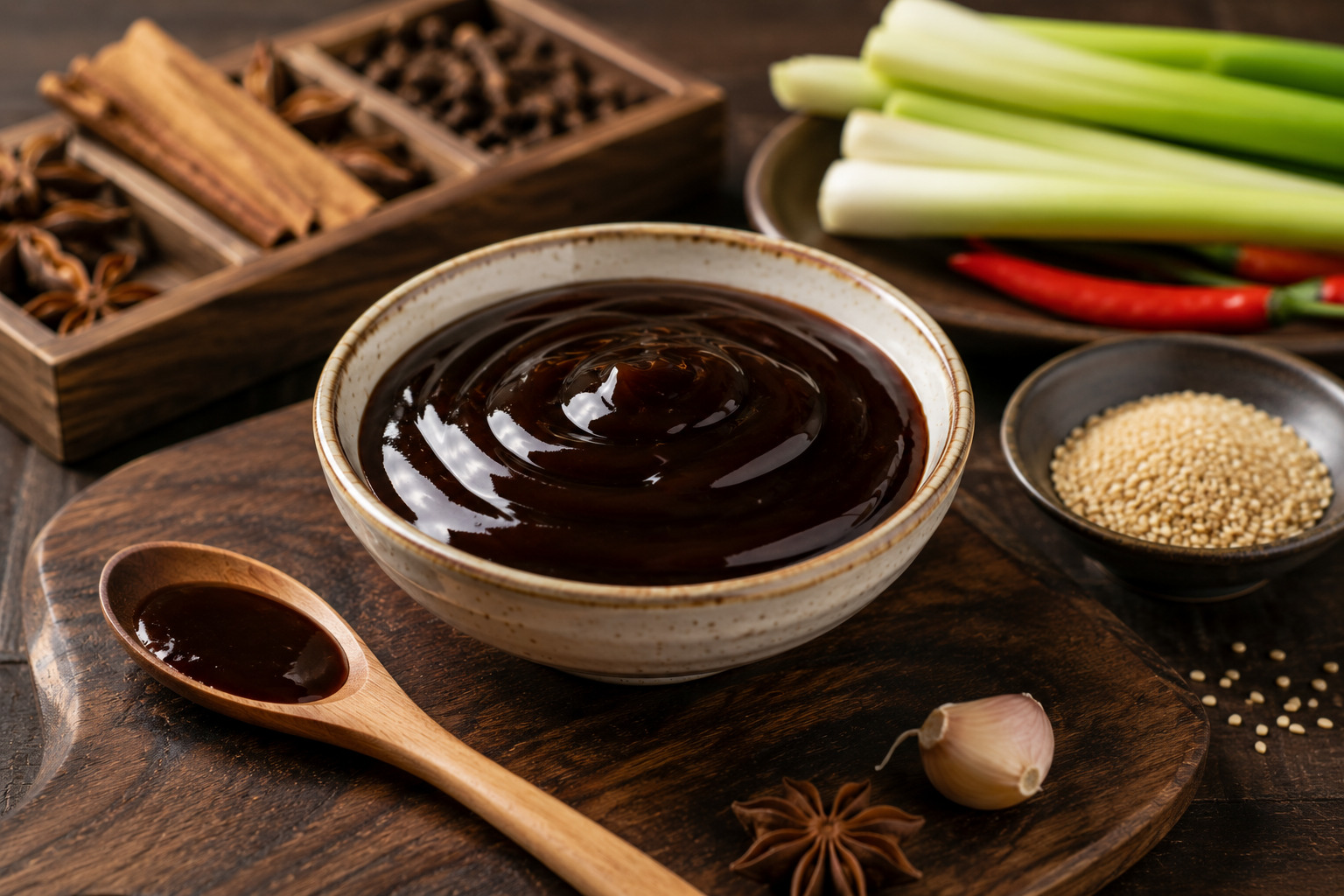
Hoisin Sauce is a rich, flavorful condiment that has become a cornerstone of Chinese and Asian cuisine. Known for its distinctive balance of sweetness, saltiness, and umami depth, this thick, dark sauce is commonly used as a glaze, marinade, dipping sauce, and cooking ingredient. Its complex flavor profile makes it an essential component in many classic dishes, including Peking duck, stir-fries, noodle recipes, spring rolls, and barbecue-style meats.
Despite its name, which translates loosely to “seafood sauce” in Chinese, Hoisin Sauce typically contains no seafood. Instead, it is traditionally made from fermented soybean paste combined with ingredients such as garlic, vinegar, sugar, sesame oil, and aromatic spices. The result is a smooth, glossy sauce with a bold, slightly sweet flavor that enhances a wide variety of savory dishes.
One of the reasons Hoisin Sauce is so popular is its versatility. It can be used as a ready-to-serve dipping sauce, brushed onto grilled meats for a caramelized finish, mixed into stir-fry sauces, or incorporated into marinades to add depth and complexity. Its unique combination of sweet and savory notes makes it a favorite among both professional chefs and home cooks.
How to Make Homemade Hoisin Sauce
Making Hoisin Sauce at home is surprisingly simple and allows you to control the balance of sweetness, saltiness, and spice. This homemade version delivers a rich flavor similar to traditional recipes while using ingredients that are easy to find.
Ingredients
- 4 tablespoons soybean paste or miso paste
- 2 tablespoons soy sauce
- 1 tablespoon peanut butter or sesame paste
- 1 tablespoon honey or brown sugar
- 2 teaspoons rice vinegar
- 1 teaspoon sesame oil
- 1 clove garlic, finely minced
- ½ teaspoon Chinese five-spice powder
- 1–2 tablespoons water (as needed)
Instructions
- Place the soybean paste, soy sauce, peanut butter, honey, rice vinegar, sesame oil, garlic, and five-spice powder in a mixing bowl.
- Whisk the ingredients together until smooth and fully combined.
- Add water gradually until the desired consistency is reached.
- Taste the sauce and adjust the sweetness or saltiness according to your preference.
- Transfer the sauce to a clean jar or airtight container.
- Refrigerate for at least 30 minutes before use to allow the flavors to blend.
- Serve as a dipping sauce, marinade, glaze, or cooking ingredient.
Tips for the Best Hoisin Sauce
- Use high-quality soybean or miso paste for the most authentic flavor.
- Adjust the amount of honey or sugar to achieve your preferred sweetness.
- Chinese five-spice powder adds the traditional aromatic character of Hoisin Sauce.
- For a spicier version, add a small amount of chili paste or red pepper flakes.
- Store the sauce in an airtight container in the refrigerator for up to two weeks.
- Stir before each use, as some ingredients may naturally separate over time.
Popular Uses for Hoisin Sauce
Hoisin Sauce is incredibly versatile and can be incorporated into numerous recipes. It is commonly served as a dipping sauce for spring rolls, dumplings, and roasted meats. It is also frequently used in stir-fries, noodle dishes, and barbecue marinades. Many chefs use Hoisin Sauce to create rich glazes for chicken, pork, duck, and beef, giving dishes a beautiful shine and irresistible flavor.
Variations and Modern Adaptations
While traditional Hoisin Sauce relies on fermented soybean paste, modern recipes often include ingredients such as black bean paste, peanut butter, sesame paste, or additional spices to create unique flavor variations. Some versions are sweeter, while others emphasize savory or spicy notes. Vegan and gluten-free alternatives are also widely available, making Hoisin Sauce accessible to a variety of dietary preferences.
With its perfect balance of sweetness, savoriness, and aromatic spices, Hoisin Sauce remains one of the most beloved condiments in Asian cuisine. Whether used as a dipping sauce, marinade, glaze, or cooking ingredient, this versatile sauce adds rich flavor and authentic character to countless dishes, making it a must-have staple in any kitchen.