Queso Fresco Cheese
Queso Fresco Cheese: A Fresh and Authentic Mexican Cheese
Introduction
Queso Fresco, which translates to “fresh cheese” in Spanish, is one of the most beloved cheeses in Mexican and Latin American cuisine. Known for its mild flavor, soft texture, and remarkable versatility, Queso Fresco has become a staple ingredient in countless traditional dishes. Unlike aged cheeses, it is consumed fresh, giving it a light, clean taste that complements a wide variety of foods.
Whether crumbled over tacos, sprinkled on salads, or served alongside grilled vegetables, Queso Fresco offers a refreshing dairy flavor that enhances meals without overpowering other ingredients.
What Is Queso Fresco?
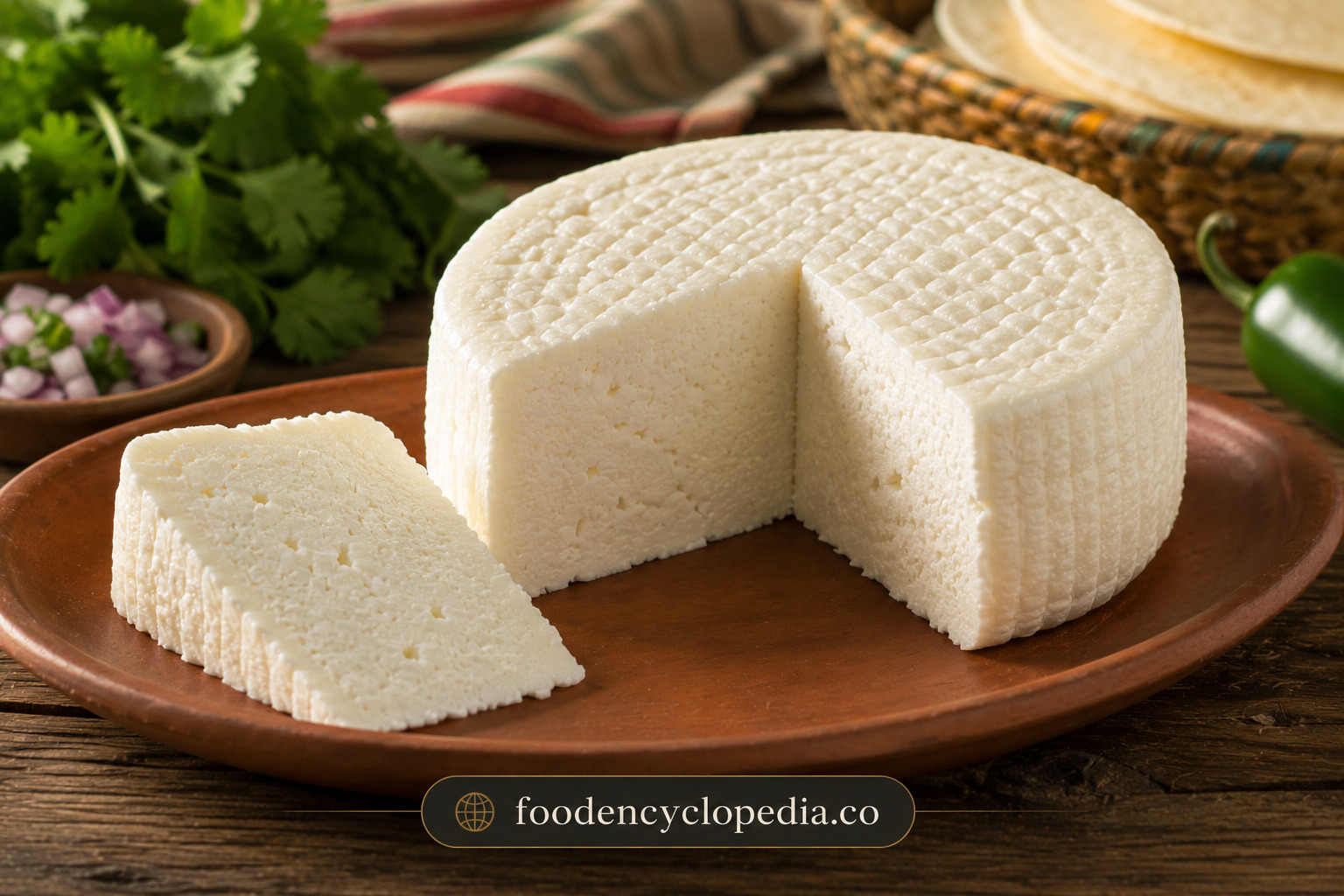
Queso Fresco is a soft, fresh cheese traditionally made from cow’s milk or a combination of cow’s and goat’s milk. It has a bright white appearance, a slightly crumbly texture, and a delicate, milky flavor with subtle tangy notes.
Because it is not aged, Queso Fresco retains a high moisture content, resulting in a soft and creamy consistency. Unlike many melting cheeses, it softens when heated but generally maintains its shape, making it ideal for garnishing hot dishes.
Key Characteristics of Queso Fresco
- Fresh, mild, and slightly tangy flavor
- Soft and crumbly texture
- Bright white appearance
- High moisture content
- Traditionally enjoyed fresh rather than aged
- Commonly used in Mexican and Latin American cuisine
The History of Queso Fresco
Queso Fresco has deep roots in Latin American culinary traditions. The cheese originated from cheesemaking techniques introduced by Spanish settlers and evolved over centuries into a distinct regional product. Today, it remains an essential ingredient in many authentic Mexican recipes and is widely produced throughout Latin America and the United States.
Its simplicity and fresh taste have made it a favorite among home cooks and professional chefs alike.
How Queso Fresco Is Made
One of the reasons for Queso Fresco’s popularity is its relatively simple production process. Traditional methods focus on preserving the fresh flavor of the milk while creating a delicate texture.
1. Preparing the Milk
Fresh milk is carefully filtered and heated to the appropriate temperature. High-quality milk is essential for producing flavorful and creamy cheese.
2. Acidification and Coagulation
An acidic ingredient such as vinegar, lemon juice, or a starter culture is added to the warm milk. This causes the milk proteins to coagulate and form curds.
3. Separating the Curds
As curds develop, they separate naturally from the liquid whey. The mixture is gently stirred to encourage even curd formation.
4. Draining the Whey
The curds are transferred into cheesecloth or fine strainers to remove excess whey. Proper draining helps create the desired texture.
5. Salting
Salt is mixed into the curds to enhance flavor and improve preservation.
6. Molding and Pressing
The curds are placed into molds and lightly pressed. Unlike many hard cheeses, only gentle pressure is applied to retain the cheese’s soft texture.
7. Cooling and Fresh Consumption
After molding, the cheese is chilled and typically consumed within a short period. Since it is a fresh cheese, it does not undergo long-term aging.
Nutritional Benefits of Queso Fresco
Queso Fresco provides several valuable nutrients, making it a nutritious addition to a balanced diet.
Nutritional Highlights
- Excellent source of protein
- Rich in calcium for healthy bones and teeth
- Contains phosphorus and essential minerals
- Provides vitamins A and B12
- Lower in fat than many aged cheeses
As with all dairy products, moderation is recommended, especially for individuals monitoring sodium intake.
Culinary Uses of Queso Fresco
Queso Fresco is prized for its versatility and ability to complement a wide range of dishes.
Popular Ways to Enjoy Queso Fresco
- Crumbled over tacos and enchiladas
- Sprinkled on salads and soups
- Added to rice and bean dishes
- Served with fresh fruit
- Used in sandwiches and wraps
- Garnished on roasted vegetables
- Included in traditional Mexican breakfasts
Its mild flavor allows it to enhance dishes without dominating other ingredients.
Storage and Shelf Life
Because Queso Fresco is a fresh cheese, proper storage is important. It should be refrigerated and kept in an airtight container. For the best flavor and texture, it is typically consumed within a few days to a couple of weeks, depending on production methods and packaging.
Conclusion
Queso Fresco is a classic fresh cheese that embodies the simplicity and richness of traditional Mexican cheesemaking. With its mild flavor, soft texture, and exceptional versatility, it remains a favorite ingredient in both traditional and modern cuisine. From its straightforward production process to its countless culinary applications, Queso Fresco continues to earn its place as one of the most cherished fresh cheeses in the world.
For food enthusiasts seeking authentic flavors and fresh dairy products, Queso Fresco offers a delicious introduction to the vibrant traditions of Latin American cuisine.