Moroccan Tea
Moroccan Tea: A Complete Guide to the Art of “Atay” and How to Make It at Home
Introduction
Few beverages carry as much cultural weight as Moroccan mint tea. Known locally as atay or shai, this sweet, aromatic green tea infused with fresh mint is far more than a drink in Morocco — it’s a ritual of hospitality, friendship, and tradition that has been passed down for generations. Often called “Moroccan whiskey” in a nod to its ceremonial pouring and social importance, Moroccan tea is served everywhere from bustling souks in Marrakech to quiet family living rooms across the country.
In this guide, you’ll learn the history behind Moroccan mint tea, the ingredients and equipment you need, and a step-by-step method for brewing an authentic cup at home.
A Brief History of Moroccan Mint Tea
Tea arrived in Morocco in the 18th and 19th centuries through trade with Europe, particularly Britain, which sold Chinese gunpowder green tea to Moroccan merchants. Moroccans combined this imported tea with native spearmint (known as nana) and generous amounts of sugar, creating a completely unique beverage that became a cornerstone of daily life. Today, offering a guest a glass of mint tea is considered an essential act of Moroccan hospitality — refusing it is often seen as impolite.
Why Moroccan Tea Is Different
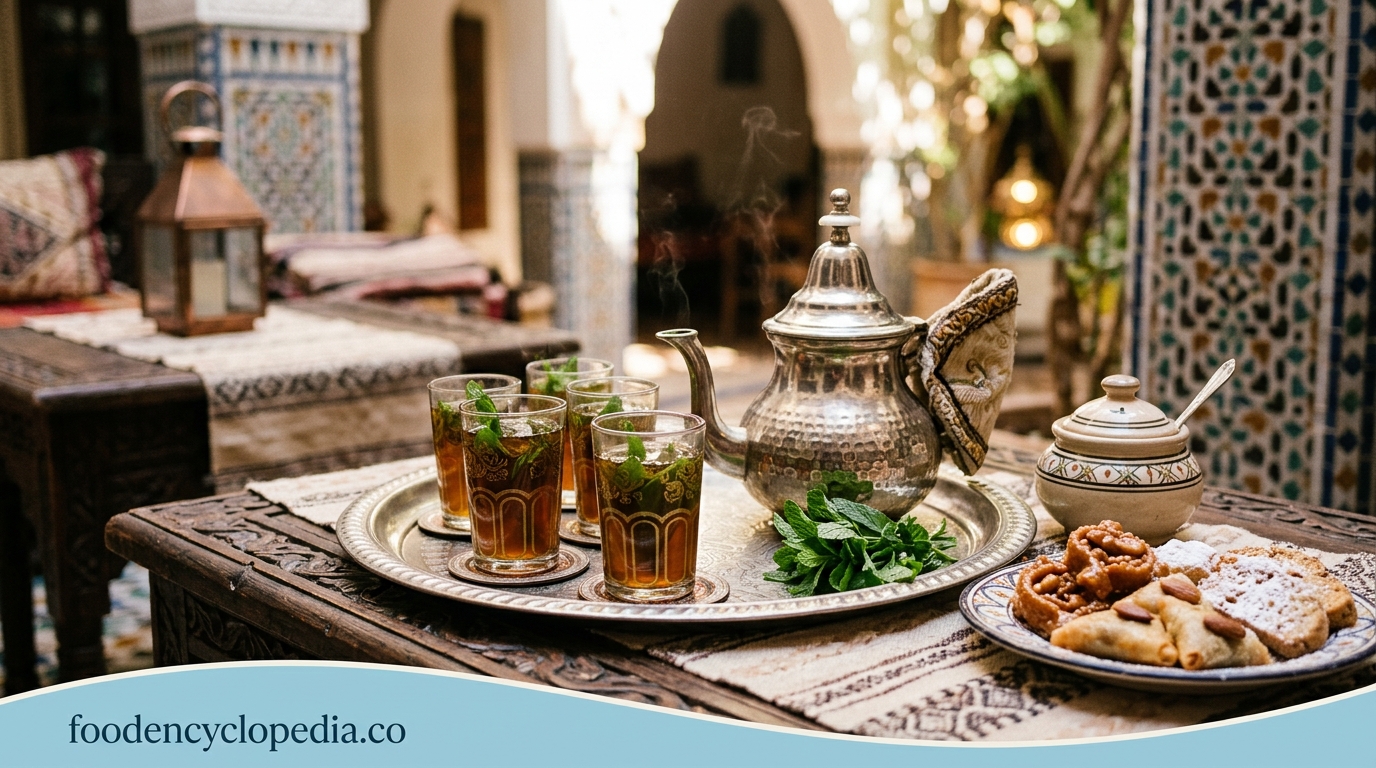
What sets Moroccan tea apart from other mint or green teas is the technique. It isn’t simply steeped and served; it’s brewed, aerated, and poured from a height to create a light layer of foam on top, called the “turban.” The tea is traditionally prepared in a decorated metal teapot and served in small, ornate glasses, often accompanied by dates, almonds, or Moroccan pastries.
Ingredients You’ll Need
To make traditional Moroccan mint tea for about 4–6 people, gather the following:
- Gunpowder green tea – 1 to 2 tablespoons (loose leaf, rolled into small pellets)
- Fresh spearmint – a large handful of stems and leaves (peppermint can substitute, though spearmint is traditional)
- Sugar – 4 to 8 sugar cubes or 3–4 tablespoons, adjusted to taste
- Water – about 4 cups (1 liter), boiling
Optional additions include a few sprigs of wormwood (sheba) in winter, or orange blossom water for a floral note.
Equipment
- A Moroccan teapot (traditionally called a berrad), though any metal or ceramic teapot works
- Small tea glasses (traditional Moroccan glasses are ideal, but any small heatproof glasses will do)
- A tray for serving
How to Make Moroccan Mint Tea: Step-by-Step
Step 1: Rinse the Tea Leaves
Place the loose gunpowder green tea in the teapot and pour in a small amount of boiling water — just enough to cover the leaves. Swirl gently and pour this water out immediately. This step, sometimes called “washing” the tea, removes bitterness and dust from the leaves while preserving their flavor for the actual brew.
Step 2: Add Mint and Sugar
Add the fresh mint leaves and sugar directly into the teapot with the rinsed tea leaves. Traditionally, the sugar is added at this stage so it dissolves fully during brewing, though some hosts prefer to sweeten each glass individually.
Step 3: Brew
Fill the teapot with boiling water and place it over low heat (traditionally on a small brazier, but a stovetop on low works fine) for 3 to 5 minutes. Avoid boiling the tea vigorously, as this can make it bitter.
Step 4: The Pour-and-Return Technique
This is the signature step of Moroccan tea preparation. Pour a glass of tea, then pour it back into the pot. Repeat this two or three times. This mixes the sugar evenly throughout the pot and begins developing the characteristic foam.
Step 5: Serve with Height
Pour the tea into each glass by lifting the teapot high above the glass, creating a thin stream of tea that falls from a height of 12 inches (30 cm) or more. This aerates the tea and produces the frothy “turban” on top that signals a well-made glass of Moroccan tea. It also helps cool the tea slightly before drinking.
Step 6: Taste and Adjust
Before serving guests, it’s customary for the host to taste the first glass to check the balance of sweetness and mint. Adjust sugar as needed, then serve.
Tips for the Perfect Glass
- Use fresh mint. Dried mint can work in a pinch, but fresh spearmint delivers the bright, authentic aroma Moroccan tea is known for.
- Don’t over-steep. Green tea becomes bitter if left brewing too long — aim for a short, gentle brew.
- Adjust sweetness gradually. Moroccan tea is traditionally quite sweet, but you can reduce sugar to suit your taste without losing the drink’s character.
- Reuse the tea leaves. In Morocco, the same tea leaves and mint are often used for two or three pots throughout the day, with fresh mint and sugar added each time.
Serving Moroccan Tea
Moroccan tea is typically served three times during a sitting, with each pour said to represent a different stage of life or friendship — often summarized in the saying: “The first glass is as gentle as life, the second is as strong as love, and the third is as bitter as death.” It pairs beautifully with sweets like chebakia, almond cookies, or fresh dates.
Conclusion
Moroccan mint tea is a simple combination of green tea, fresh mint, and sugar — but the ritual surrounding it transforms a humble beverage into an experience of warmth and connection. With a good teapot, fresh mint, and a little practice with the pour, you can bring a taste of Moroccan hospitality into your own home. Whether you’re hosting guests or simply treating yourself, a well-poured glass of atay is always a good idea.