Velouté Sauce
Velouté Sauce: The Elegant French Mother Sauce
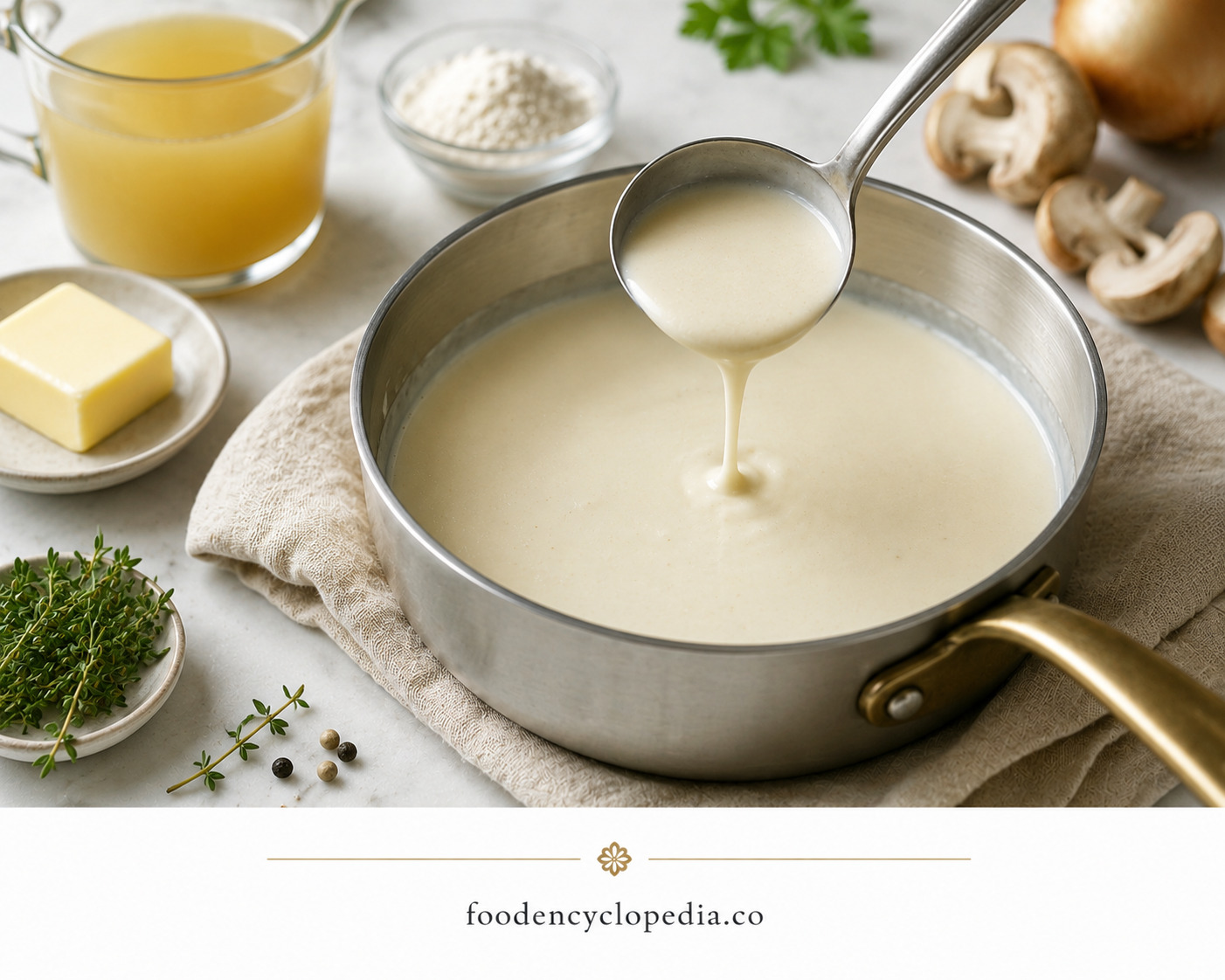
Velouté Sauce is one of the five classic mother sauces of French cuisine, renowned for its silky texture, delicate flavor, and remarkable versatility. Often considered a cornerstone of traditional culinary arts, Velouté serves as the foundation for numerous refined sauces and dishes found in both professional kitchens and home cooking. Made from a simple combination of light stock and a blond roux, this smooth and savory sauce adds depth, richness, and elegance to a wide variety of recipes.
Originating from French culinary traditions, Velouté derives its name from the French word velours, meaning “velvet,” which perfectly describes its smooth and luxurious consistency. Unlike heavier cream-based sauces, Velouté offers a lighter texture while still providing a rich flavor profile that complements poultry, seafood, vegetables, and pasta dishes.
What Does Velouté Sauce Taste Like?
Velouté Sauce has a mild, savory flavor that reflects the stock used in its preparation. Whether made with chicken, fish, or vegetable stock, the sauce develops subtle depth and complexity while maintaining a smooth and delicate character. Its balanced taste makes it an excellent base for additional seasonings, herbs, mushrooms, cream, or wine.
How to Make Velouté Sauce
Preparing Velouté Sauce requires only a few ingredients and careful attention to technique.
Ingredients
- 2 tablespoons unsalted butter
- 2 tablespoons all-purpose flour
- 2 cups light stock (chicken, fish, or vegetable)
- Salt and white pepper to taste
Step 1: Prepare the Blond Roux
Melt the butter in a saucepan over medium heat. Add the flour and whisk continuously until a smooth paste forms. Cook the mixture for 2–3 minutes without allowing it to brown significantly. This creates a blond roux, which serves as the thickening base for the sauce.
Step 2: Add the Stock
Gradually pour the warm stock into the roux while whisking constantly. Adding the liquid slowly helps prevent lumps and ensures a smooth consistency.
Step 3: Simmer the Sauce
Bring the mixture to a gentle simmer and continue stirring occasionally. Allow the sauce to cook for approximately 20–30 minutes, or until it thickens and develops a velvety texture.
Step 4: Strain and Season
For an exceptionally smooth finish, strain the sauce through a fine-mesh sieve. Season with salt and white pepper according to taste.
Step 5: Serve or Use as a Base
Velouté can be served immediately or used as the foundation for derivative sauces such as Supreme Sauce, Allemande Sauce, or various mushroom and seafood sauces.
Nutritional Value of Velouté Sauce
Velouté Sauce is generally lighter than cream-based sauces, making it a popular choice for those seeking rich flavor without excessive heaviness. It contains moderate amounts of carbohydrates and fats from the roux while deriving much of its flavor from nutrient-rich stock.
Culinary Uses of Velouté Sauce
Velouté Sauce is commonly used in:
- Roasted and grilled chicken dishes
- Seafood and fish recipes
- Vegetable gratins
- Pasta dishes
- Savory pies and casseroles
- Creamy soups and stews
- Gourmet French-inspired entrées
Its adaptability makes it one of the most valuable sauces in classical and modern cooking.
Conclusion
Velouté Sauce is a timeless French culinary masterpiece that showcases how simple ingredients can create extraordinary flavor and texture. With its smooth consistency, subtle richness, and versatility, Velouté remains an essential component of classic cuisine and a foundation for countless sophisticated dishes. Whether used on its own or as the base for more elaborate sauces, Velouté Sauce continues to be a hallmark of fine cooking around the world.