Pesto Rosso Sauce
Pesto Rosso: The Bold Italian Red Sauce You Need to Know
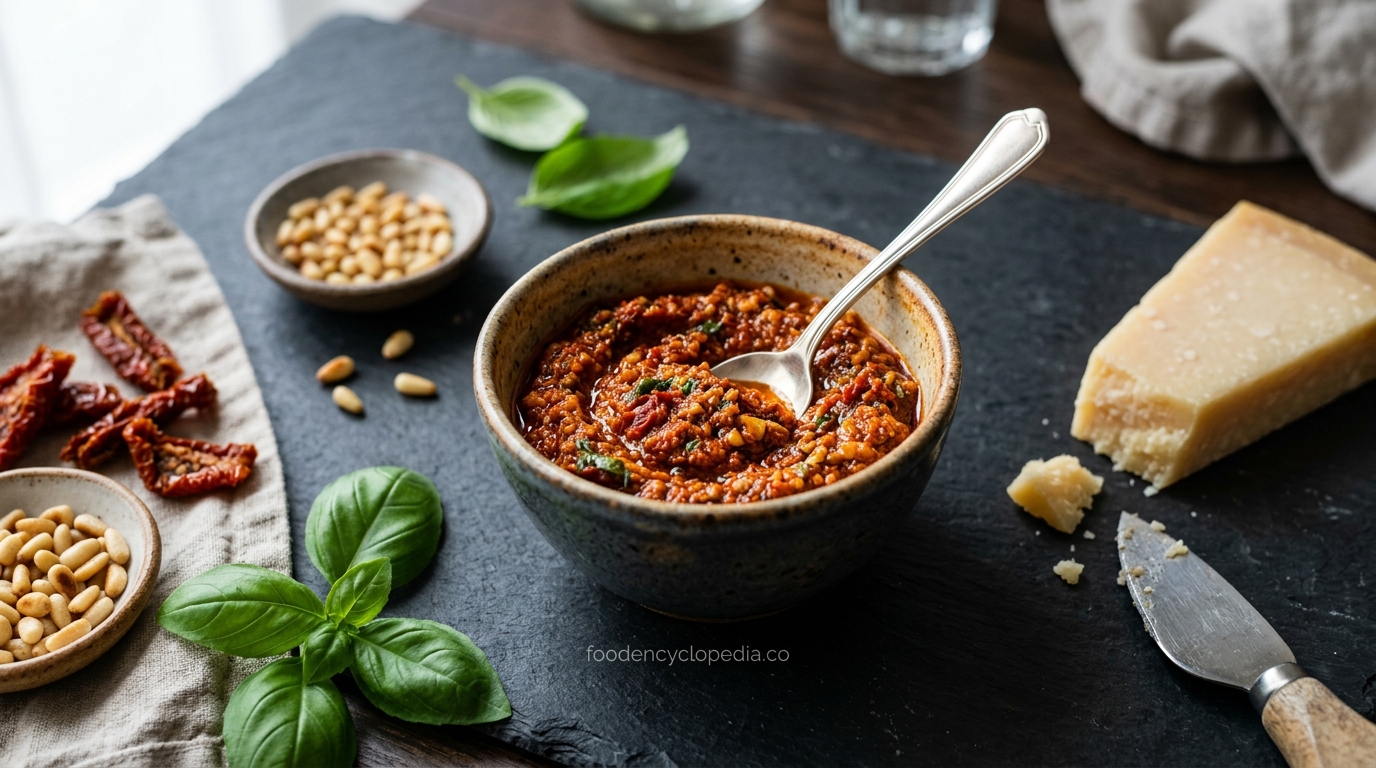
Rich, sun-drenched, and intensely flavorful — Pesto Rosso (also known as Pesto alla Siciliana or red pesto) is the vibrant Sicilian cousin of the classic Genovese green pesto. Made primarily from sun-dried tomatoes, roasted red peppers, almonds, garlic, Parmesan, and olive oil, this deep crimson sauce delivers a complex, savory depth that has made it a staple in Italian kitchens and a rising star on menus worldwide.
Whether you’re a pasta lover, a home cook, or a food enthusiast looking to elevate your repertoire, Pesto Rosso is a must-have recipe in your collection.
What Is Pesto Rosso?
The word pesto comes from the Italian verb pestare, meaning “to pound” or “to crush” — a nod to the traditional mortar-and-pestle preparation. While green pesto (Pesto alla Genovese) hails from Liguria and is built on fresh basil and pine nuts, Pesto Rosso traces its roots to Sicily, where the sunny Mediterranean climate produces some of the world’s finest sun-dried tomatoes and almonds.
Its flavor profile is unmistakably bold: tangy from the tomatoes, nutty from the almonds, savory-sweet from roasted peppers, and richly herbal. Unlike green pesto, it’s deeply concentrated — a little goes a long way.
Key Differences: Red Pesto vs. Green Pesto
| Pesto Rosso | Pesto Genovese | |
|---|---|---|
| Base | Sun-dried tomatoes | Fresh basil |
| Nuts | Almonds | Pine nuts |
| Origin | Sicily | Liguria |
| Flavor | Bold, tangy, savory | Fresh, herbal, bright |
| Color | Deep red | Vivid green |
| Shelf life | Longer | Shorter |
Why You Should Make Pesto Rosso at Home
Store-bought versions exist, but homemade Pesto Rosso is in a different league. Here’s why it’s worth making from scratch:
- Fresher flavor — Freshly blended ingredients deliver a vibrancy that jarred sauces simply can’t match.
- Customizable heat — Add a pinch of chili flakes for a spicy Sicilian kick.
- Cleaner ingredients — No preservatives, excess salt, or artificial flavors.
- Ready in minutes — The entire recipe takes under 15 minutes with a food processor.
- Incredibly versatile — Use it on pasta, pizza, bruschetta, grilled meats, sandwiches, and more.
Pesto Rosso Recipe
Prep time: 10 minutes
Total time: 10–15 minutes
Yield: Approximately 1 cup (enough for 4 pasta servings)
Ingredients
- 200g (7 oz) sun-dried tomatoes (oil-packed, drained — reserve the oil)
- 1 large roasted red pepper (jarred or freshly roasted and peeled)
- 60g (½ cup) blanched almonds (or substitute walnuts for a deeper flavor)
- 50g (½ cup) Parmigiano-Reggiano, freshly grated
- 2 cloves garlic, peeled
- 2 tablespoons fresh basil leaves (or 1 tsp dried)
- ½ teaspoon dried chili flakes (optional, for heat)
- 4–6 tablespoons extra-virgin olive oil (use reserved sun-dried tomato oil for extra flavor)
- Salt and black pepper, to taste
- 1 teaspoon balsamic vinegar (optional — adds a subtle depth)
Instructions
Step 1: Toast the almonds In a dry skillet over medium heat, toast the almonds for 2–3 minutes until lightly golden and fragrant. Keep a close eye — they burn quickly. Remove from heat and allow to cool slightly.
Step 2: Blend the base Add the sun-dried tomatoes, roasted red pepper, toasted almonds, garlic, basil, and chili flakes (if using) to a food processor. Pulse 8–10 times until roughly chopped and starting to combine.
Step 3: Add oil gradually With the processor running on low, slowly drizzle in the olive oil. Start with 4 tablespoons, then assess the consistency. Add more oil for a looser, saucier texture or less for a thick, spreadable paste.
Step 4: Incorporate the cheese Add the grated Parmigiano-Reggiano and pulse again until just combined. Avoid over-processing — you want some texture remaining, not a completely smooth paste.
Step 5: Season to taste Taste the pesto and adjust with salt, black pepper, and a splash of balsamic vinegar if desired. The sun-dried tomatoes are already quite salty, so season conservatively.
Step 6: Serve or store Use immediately, or transfer to a sterilized jar. Cover the surface with a thin layer of olive oil to prevent oxidation. Refrigerate for up to 2 weeks, or freeze in ice-cube trays for up to 3 months.
How to Use Pesto Rosso
Once you have a jar of this magnificent sauce on hand, the possibilities are endless:
Pasta — Toss with rigatoni, fusilli, or trofie. Loosen with a splash of pasta cooking water for a silky, restaurant-worthy sauce.
Pizza — Swap tomato sauce for Pesto Rosso as your base. Top with mozzarella, arugula, and prosciutto.
Bruschetta — Spread onto grilled sourdough and top with fresh burrata or ricotta.
Grilled proteins — Spoon over grilled chicken, lamb chops, or swordfish for an instant Mediterranean upgrade.
Sandwiches & wraps — Use as a spread in place of mayonnaise or hummus.
Dips & appetizers — Serve alongside crusty bread, crackers, or crudités as part of an antipasto board.
Tips for the Best Pesto Rosso
Use oil-packed sun-dried tomatoes. Dry-packed tomatoes work, but oil-packed ones contribute richness and are easier to blend. Always reserve the flavored oil — it’s liquid gold.
Don’t skip the toasting step. Toasting almonds releases their natural oils and intensifies their nutty flavor, which is foundational to a great Pesto Rosso.
Keep it textured. Great pesto isn’t a smooth puree — pulse carefully and stop when you reach a coarse, slightly chunky consistency.
Use high-quality Parmesan. Genuine Parmigiano-Reggiano has a depth of umami flavor that pre-grated substitutes can’t replicate.
Adjust the ratio to your taste. More tomatoes = tangier and deeper. More almonds = nuttier and richer. More oil = saucier. Make it your own.
Storage & Make-Ahead Notes
Pesto Rosso keeps beautifully — far longer than its green counterpart. Stored in an airtight jar with an olive oil seal, it stays fresh in the refrigerator for up to 2 weeks. For longer storage, freeze in ice-cube trays, then transfer cubes to a freezer bag. Frozen pesto keeps for up to 3 months and can be added directly to a hot pan of pasta.
Final Thoughts
Pesto Rosso is one of those rare recipes that is simultaneously simple to make and impressively sophisticated in flavor. In under 15 minutes, you can create a sauce that transforms an ordinary weeknight dinner into something genuinely special.
Its bold, sun-kissed personality — deeply savory, slightly tangy, with a rich nuttiness — is everything Italian home cooking represents: quality ingredients, minimal fuss, maximum flavor.
Once you’ve made it at home, you’ll never reach for the jar on the supermarket shelf again.