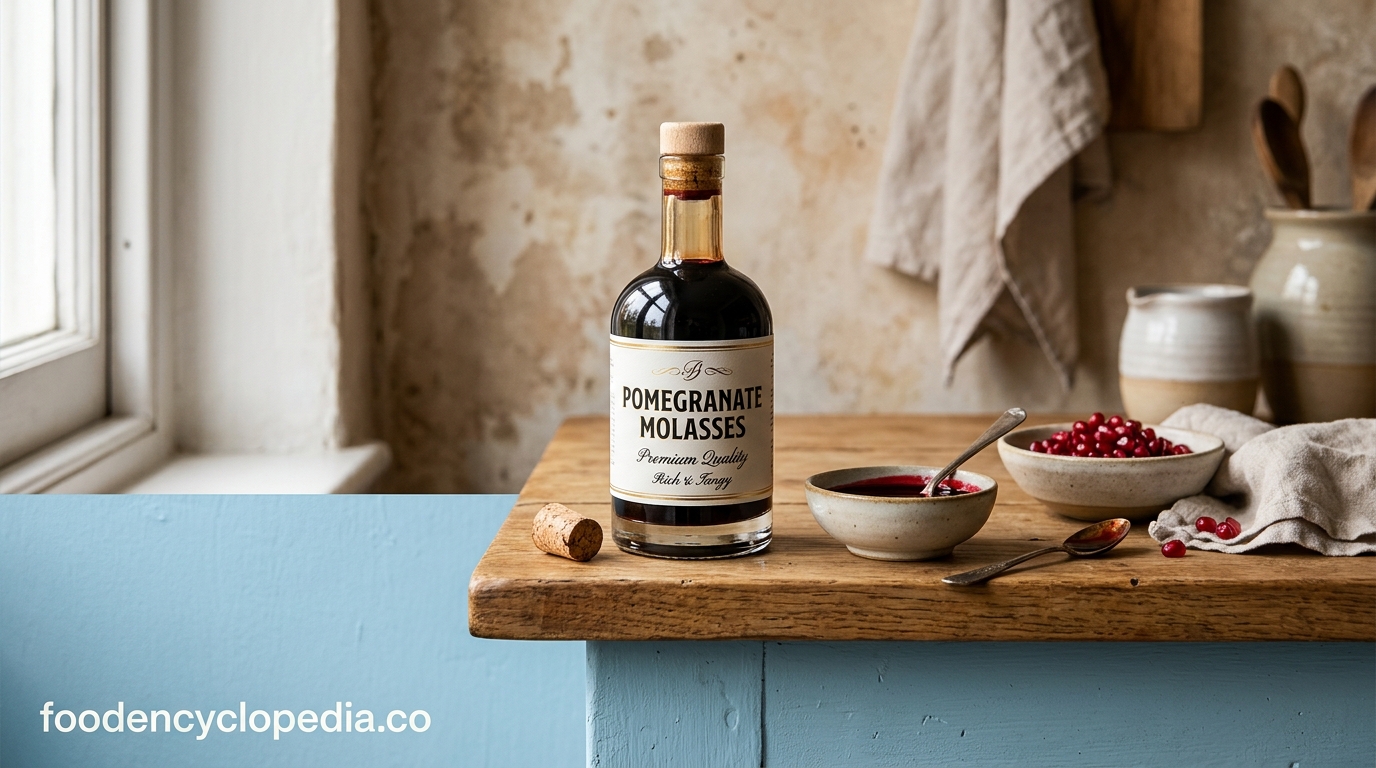
Pomegranate Molasses
Pomegranate Molasses: The Tangy-Sweet Syrup That Belongs in Every Kitchen
If you’ve ever tasted a Middle Eastern salad with a deep, tart-sweet dressing or a Persian stew with a rich, fruity undertone, chances are pomegranate molasses was the secret ingredient. This vibrant, ruby-red syrup has been a staple of Middle Eastern, Mediterranean, and Caucasian cuisines for centuries, and it’s rapidly gaining popularity in kitchens around the world thanks to its bold flavor and versatility.
In this guide, we’ll cover exactly what pomegranate molasses is, how it’s used, its nutritional benefits, and — most importantly — a simple homemade pomegranate molasses recipe you can make with just one ingredient.
What Is Pomegranate Molasses?
Pomegranate molasses is a thick, dark syrup made by slowly reducing pomegranate juice until it becomes concentrated, tangy, and slightly sweet. Despite its name, it contains no actual molasses (the byproduct of sugar refining) — the term “molasses” simply refers to its syrupy, viscous texture.
The flavor profile is what makes it so special: a balance of bright acidity, deep sweetness, and a subtle bitterness that adds complexity to both sweet and savory dishes. It’s sometimes labeled “pomegranate concentrate” or “pomegranate syrup” on store shelves, though true pomegranate molasses is unsweetened or only lightly sweetened, letting the fruit’s natural tartness shine through.
A Staple of Middle Eastern and Mediterranean Cooking
Pomegranate molasses is a cornerstone of Levantine, Persian, Turkish, and Caucasian cuisines. It’s the key ingredient in dishes like:
- Muhammara — a Syrian roasted red pepper and walnut dip
- Fesenjan — a Persian stew of chicken or duck simmered in pomegranate molasses and ground walnuts
- Fattoush — a Levantine bread salad where it forms the backbone of the dressing
- Grilled meats and kebabs — used as a glaze or marinade for a sweet-tart crust
- Roasted vegetables — drizzled on eggplant, squash, or root vegetables for depth
Beyond savory applications, pomegranate molasses also shows up in cocktails, salad dressings, glazes for salmon, and even desserts, where a small drizzle can balance out rich or fatty flavors.
Health Benefits of Pomegranate Molasses
Because it’s made purely from reduced pomegranate juice, pomegranate molasses retains many of the antioxidant compounds pomegranates are known for, including polyphenols and anthocyanins. These compounds are associated with anti-inflammatory properties and support for heart health. Keep in mind that the reduction process concentrates natural sugars as well, so it’s best enjoyed in moderation as a flavor-packed ingredient rather than a health supplement.
How to Make Pomegranate Molasses at Home
The good news is that pomegranate molasses is remarkably easy to make — it typically requires just one ingredient (pomegranate juice) and, optionally, a touch of sugar and lemon juice to adjust sweetness and acidity. Store-bought versions can be expensive or hard to find, so making it at home is both economical and rewarding.
Ingredients
- 4 cups (1 liter) pure, unsweetened pomegranate juice (not from concentrate, if possible)
- 2 tablespoons sugar (optional, for a milder tang)
- 1 tablespoon lemon juice (optional, to boost acidity and help preserve the syrup)
Instructions
- Pour the juice into a wide, heavy-bottomed saucepan. A wider pan speeds up evaporation and reduction.
- Add sugar and lemon juice, if using, and stir to combine.
- Bring to a gentle boil over medium-high heat, then reduce to a low simmer. Avoid a rolling boil, which can scorch the sugars and turn the syrup bitter.
- Simmer uncovered for 45–75 minutes, stirring occasionally. The exact time depends on your pan size and juice volume — you’re aiming to reduce the liquid to about one-quarter to one-third of its original volume.
- Check for doneness by dipping a spoon into the syrup and letting it cool for a few seconds. It should coat the back of the spoon in a thin, glossy layer, similar to warm maple syrup. It will thicken further as it cools, so slightly underdo it rather than overreduce.
- Remove from heat and let cool completely. The molasses will continue to thicken as it reaches room temperature.
- Transfer to a clean, airtight glass jar or bottle.
Tips for Success
- Watch it closely in the last 15 minutes — reduction happens quickly toward the end, and it’s easy to go from perfectly syrupy to burnt in a matter of minutes.
- Use 100% pomegranate juice with no added sugar or preservatives for the most authentic flavor.
- Don’t skip the lemon juice if you plan to store it long-term — the added acidity helps with preservation.
- Taste as you go. Some pomegranate juices are naturally sweeter or more tart than others, so adjust sugar to your preference.
Storage
Homemade pomegranate molasses keeps well in the refrigerator for several months when stored in a sealed glass container. Its high acidity and low water content make it naturally resistant to spoilage, though always check for any off smells or mold before use.
Store-Bought vs. Homemade: Which Should You Choose?
Store-bought pomegranate molasses is widely available at Middle Eastern grocery stores and increasingly in the international aisle of major supermarkets. It’s convenient, but quality varies — some brands add corn syrup or excessive sugar, diluting the tart, fruity intensity that makes pomegranate molasses special. Making it at home gives you full control over sweetness, thickness, and purity, and it’s often more cost-effective if you already have access to good pomegranate juice.
Final Thoughts
Pomegranate molasses is one of those ingredients that instantly elevates a dish — a spoonful can transform a simple salad dressing, marinade, or glaze into something memorable. Whether you pick up a bottle at the store or reduce your own batch at home, keeping this tangy-sweet syrup on hand opens the door to a world of Middle Eastern and Mediterranean flavors worth exploring.