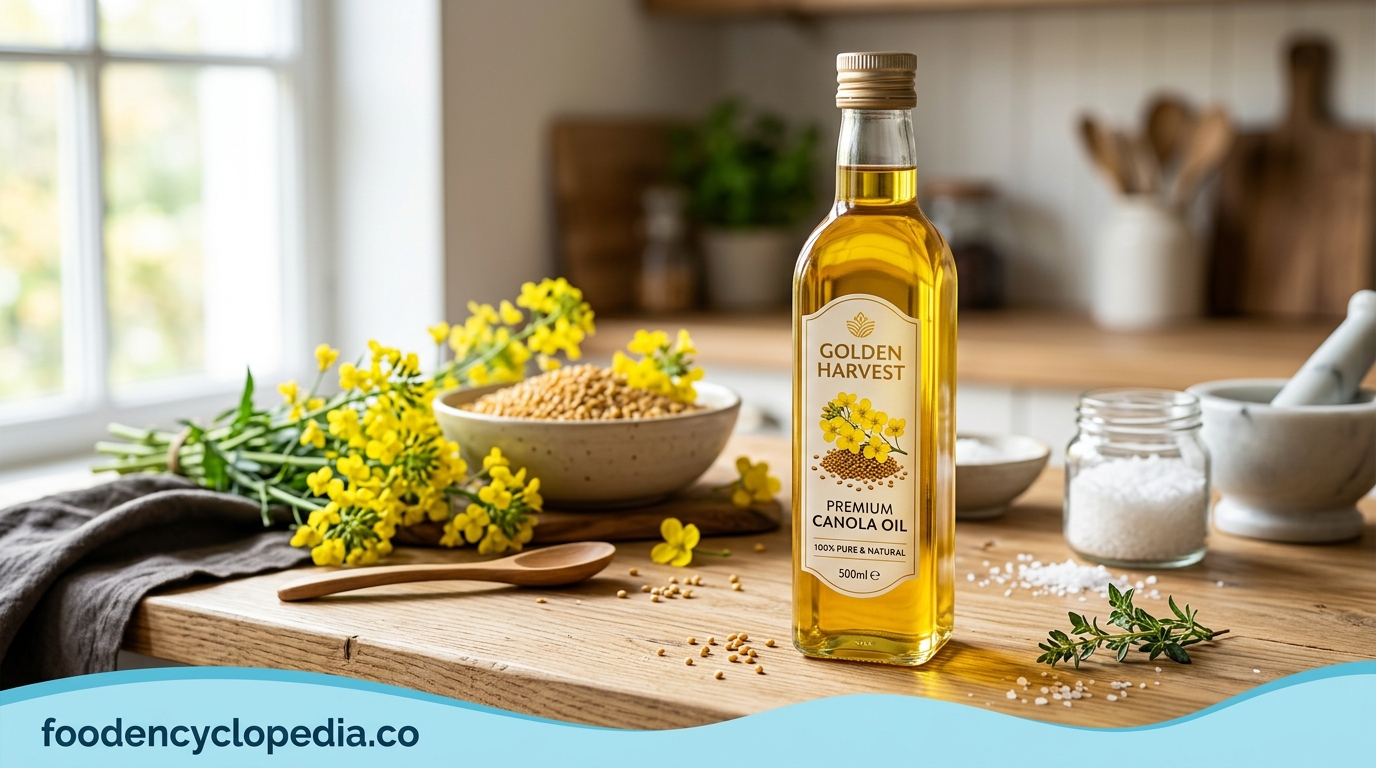
Canola Oil
Canola Oil: A Complete Introduction to Its Origins, Benefits, and How It’s Made
What Is Canola Oil?
Canola oil is one of the most widely used cooking oils in the world. It is prized for its light flavor, versatility, and heart-friendly fat profile. Extracted from the seeds of the canola plant, it appears in home kitchens, restaurants, and packaged foods, and it is also used in some industrial applications.
The name “canola” comes from Canada and oil, low acid. Canadian plant breeders developed the crop in the 1970s from traditional rapeseed. Rapeseed oil naturally contains high levels of erucic acid and compounds called glucosinolates, which made it unsuitable in large quantities for food. Through conventional plant breeding, scientists created a variety with very low levels of both, resulting in a safe, nutritious edible oil. By definition, canola oil contains less than 2% erucic acid.
Today, major producers include Canada, the European Union, China, India, and Australia.
Nutritional Profile of Canola Oil
Canola oil is valued for its balanced fatty acid composition:
- Low in saturated fat: about 7%, among the lowest of common cooking oils
- High in monounsaturated fat: roughly 60-65%, mostly oleic acid
- Source of polyunsaturated fats: about 28%, including omega-6 (linoleic acid) and plant-based omega-3 (alpha-linolenic acid, or ALA)
- Vitamin E and vitamin K: naturally present in meaningful amounts
- Cholesterol-free: like all plant oils
Health authorities, including the U.S. Food and Drug Administration, have recognized that replacing saturated fat with unsaturated fats like those in canola oil may help reduce the risk of coronary heart disease. As with any oil, moderation matters, since all oils are calorie-dense at about 120 calories per tablespoon.
Common Uses of Canola Oil
Canola oil’s neutral taste and high smoke point make it extremely versatile:
- Frying and deep-frying: refined canola oil has a smoke point of roughly 400°F (204°C)
- Sautéing and stir-frying
- Baking: adds moisture without overpowering flavor
- Salad dressings and marinades
- Food manufacturing: margarine, mayonnaise, snack foods, and baked goods
- Non-food applications: biodiesel, lubricants, and cosmetics
How Canola Oil Is Made: Step by Step
Canola oil production turns small black seeds, which are about 40-45% oil by weight, into a clear, golden liquid. Commercial production generally follows these stages.
1. Growing and Harvesting
Canola is grown as a spring or winter crop and produces bright yellow flowers before forming seed pods. When the pods mature, farmers swath (cut) the plants and let them dry in the field, then combine-harvest the seeds. The seeds are dried to a safe moisture level, around 8-9%, for storage.
2. Cleaning and Conditioning
At the processing plant, seeds are screened to remove dirt, weeds, stems, and other debris. They are then gently pre-heated, which makes the seed coat less brittle and prepares the seeds for flaking.
3. Flaking
Seeds pass through large rollers that crush them into thin flakes. This ruptures the cell walls that hold the oil and greatly increases the surface area available for extraction.
4. Cooking
The flakes are heated for a short time, typically in the range of 80-105°C (176-221°F). Cooking further breaks down cell structure, lowers oil viscosity so it flows more freely, and deactivates enzymes that could degrade oil quality.
5. Pressing
The cooked flakes go through a screw press (expeller), which mechanically squeezes out a large share of the oil, often 60-70%. The result is crude oil plus a pressed solid called press cake, which still contains some oil.
6. Solvent Extraction
To recover the remaining oil, most commercial processors wash the press cake with food-grade hexane, which dissolves the residual oil. The hexane is then evaporated and recovered for reuse, leaving a protein-rich meal. This canola meal is widely used as animal feed.
Cold-pressed alternative: Some producers skip heating and solvent extraction and press the seeds at low temperatures. Cold-pressed canola oil has a more distinctive nutty flavor and a deeper color, but yields less oil and is typically more expensive.
7. Refining
Crude canola oil is then refined to produce a clean, stable, neutral product:
- Degumming: water or acid removes phospholipids (gums)
- Neutralization: removes free fatty acids that can cause off-flavors
- Bleaching: filters through clay to remove pigments and impurities
- Deodorization: steam under vacuum removes odors and volatile compounds, resulting in a mild taste and aroma
8. Packaging
The finished oil is filtered, tested for quality, and packaged in bottles, jugs, or bulk containers, ideally in opaque or dark packaging that protects it from light.
Can You Make Canola Oil at Home?
Technically yes, but it is not practical for most people. Small countertop oil presses are available and can extract oil from canola seeds, but you would need a large quantity of seed. Home-pressed oil is unrefined, so it will be cloudy and strongly flavored, and it has a shorter shelf life and a lower smoke point than commercial oil. For most home cooks, buying cold-pressed or refined canola oil is easier and more consistent.
Choosing and Storing Canola Oil
- Refined vs. cold-pressed: choose refined for high-heat, neutral-flavor cooking, and cold-pressed for dressings and finishing.
- Non-GMO options: much of the canola grown in North America is genetically modified for herbicide tolerance. If that matters to you, look for “Non-GMO Project Verified” or organic labels.
- Storage: keep in a cool, dark place, tightly sealed. Most canola oil stays fresh for up to 12 months unopened and about 6 months after opening.
Frequently Asked Questions
Is canola oil the same as vegetable oil?
Not exactly. “Vegetable oil” is a general label, often a blend of oils such as soybean, corn, or canola. Canola oil comes solely from canola seeds.
Is canola oil healthy?
It is low in saturated fat and provides unsaturated fats, including plant-based omega-3. Used in moderation as part of a balanced diet, it is considered a heart-healthy choice.
Is canola oil the same as rapeseed oil?
They come from related plants, but canola is a specific cultivar bred for very low erucic acid and glucosinolates. In Europe, the term “rapeseed oil” is often used for what North Americans call canola oil.
Final Thoughts
Canola oil’s mild flavor, high smoke point, and favorable fat profile have made it a staple in kitchens around the globe. Understanding how it’s made, from harvest through pressing and refining, helps you choose the right type for your cooking and dietary needs.