Avocado Oil
Avocado Oil: What It Is, Why It Matters, and How to Make It
Avocado oil has moved from specialty shelf to kitchen staple. It is prized for its mild, buttery flavor, its high smoke point, and its versatility in both cooking and skincare. This guide covers what avocado oil is, how it differs from other oils, and how it is made, both commercially and at home.
What Is Avocado Oil?
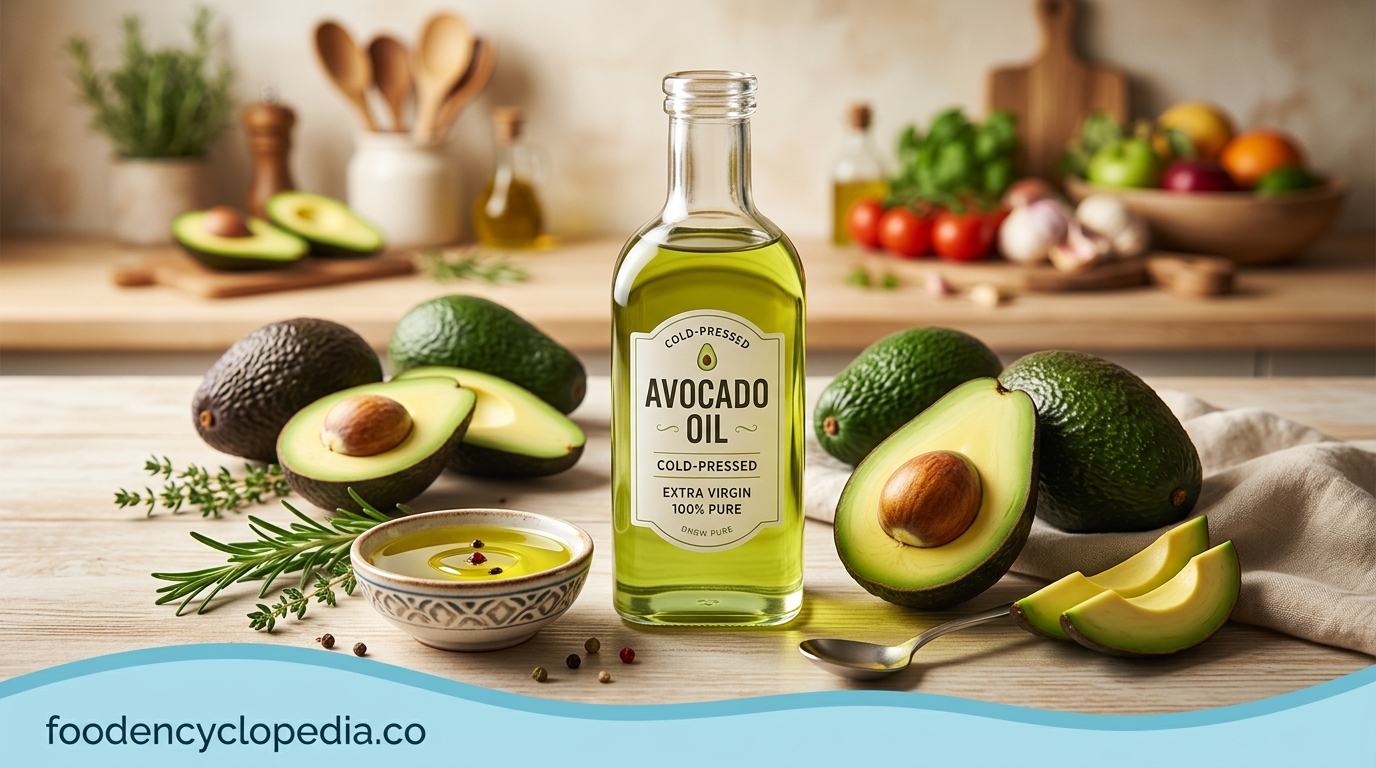
Avocado oil is a plant oil extracted from the pulp of the avocado fruit (Persea americana). Unlike most vegetable oils, which come from seeds, avocado oil comes from the fleshy part of the fruit. A ripe Hass avocado typically contains roughly 15 to 30 percent oil by weight, depending on variety and ripeness.
There are two main types:
- Unrefined (extra virgin) avocado oil: Cold-extracted and minimally processed. It is green, with a grassy, buttery flavor.
- Refined avocado oil: Filtered, deodorized, and bleached. It is pale yellow and neutral in taste, and it tolerates higher heat.
Nutritional Profile and Key Benefits
Avocado oil is rich in monounsaturated fat, mainly oleic acid, the same fatty acid that makes olive oil a heart-healthy dietary staple. It also contains vitamin E and, in unrefined versions, small amounts of carotenoids such as lutein.
Common reasons people choose it:
- High smoke point: Refined avocado oil can reach around 250°C (480°F or higher), making it suitable for searing, roasting, and frying. Unrefined versions generally handle around 190 to 200°C (375 to 400°F).
- Mild, versatile flavor: It works in dressings, marinades, baking, and grilling without overpowering a dish.
- Skin and hair care: Its emollient texture makes it a popular ingredient in moisturizers, massage oils, and hair treatments.
Note: Replacing saturated fats with unsaturated fats like avocado oil is generally associated with better heart health, but it isn’t a cure for anything. Consult a healthcare professional for personal dietary advice.
How Avocado Oil Is Made Commercially
Understanding the industrial process helps you read labels and choose better products. Cold-pressed avocado oil is typically made in these steps:
- Washing and sorting: Fruit is cleaned and graded.
- Pulping: The skin and pit are removed, and the flesh is crushed into a paste.
- Malaxation: The paste is slowly mixed at a controlled, low temperature (usually under 50°C) so tiny oil droplets merge together.
- Decanting: A centrifuge separates the oil from the solids and water.
- Polishing: A second centrifuge and filtration remove remaining moisture and fine particles.
- Refining (optional): For refined oil, additional steps neutralize flavor, color, and free fatty acids.
“Cold-pressed” or “cold-extracted” means the temperature stayed low to preserve flavor and nutrients.
How to Make Avocado Oil at Home
Homemade avocado oil is a rewarding project, though yields are modest and the result is best used within a few weeks. It works well for skincare and light cooking. Without industrial centrifuges, a simple dry-and-press method is the most practical.
What You’ll Need
- 8 to 10 very ripe avocados (Hass works best)
- A baking sheet and parchment paper
- A food processor or blender
- A heavy pot or slow cooker
- Cheesecloth or a fine nut-milk bag
- A clean glass jar or dark bottle
Step-by-Step Method
- Prep the fruit. Halve the avocados, remove the pits, and scoop out the flesh. Mash it into a smooth paste.
- Dehydrate the pulp. Spread the paste thinly on a parchment-lined tray. Dry it in an oven at its lowest setting (about 80 to 90°C / 175 to 195°F) or in a dehydrator for several hours, stirring occasionally, until it becomes dry, crumbly, and dark. Removing the water is the key step.
- Grind. Break up the dried pulp and process it into a coarse, clumpy meal.
- Extract the oil. Gently warm the meal in a pot or slow cooker on very low heat for 20 to 30 minutes, stirring often. Do not let it scorch.
- Press and strain. Wrap the warm meal in cheesecloth and squeeze firmly to release the oil. Pressing in stages gives better yield.
- Settle and filter. Let the oil sit for several hours so sediment and moisture settle, then strain through clean cheesecloth or a coffee filter.
- Store properly. Pour into a clean, dry, dark glass bottle and keep it in the refrigerator.
Tips for Better Results
- Use fully ripe fruit. Underripe avocados contain less oil and more water.
- Keep the heat low. Overheating degrades flavor and nutrients and can produce a burnt taste.
- Expect a small yield. Eight to ten avocados typically produce only a small jar of oil.
- Use it quickly. Homemade oil lacks industrial filtration, so any leftover moisture shortens shelf life. Refrigerate and use within a few weeks, and discard if it smells off.
Popular Uses for Avocado Oil
- Cooking: Sautéing, roasting vegetables, grilling, and stir-frying
- Salad dressings and dips: Especially unrefined oil for its fresh flavor
- Baking: A neutral substitute for butter or vegetable oil in many recipes
- Skincare: Face and body moisturizer, cuticle oil, or massage oil
- Haircare: Pre-shampoo conditioning treatment
How to Choose a Quality Avocado Oil
When buying, look for:
- “Cold-pressed” or “extra virgin” on the label
- Dark glass packaging to protect against light
- A harvest or best-by date
- Single-ingredient labeling (100% avocado oil, with no blends)
Because avocado oil is sometimes diluted with cheaper oils, buying from transparent, reputable brands matters.
Frequently Asked Questions
Is avocado oil better than olive oil?
Neither is universally better. Avocado oil handles higher heat, while extra virgin olive oil has a more robust flavor and a longer research record. Many kitchens use both.
Can you make avocado oil without a press?
Yes. The dry-and-squeeze method above uses only basic kitchen tools, though yields are lower than with commercial equipment.
How long does avocado oil last?
Unopened commercial oil lasts about 12 to 24 months when stored cool and dark. Homemade oil should be refrigerated and used within a few weeks.
Final Thoughts
Avocado oil combines a heat-tolerant profile, a gentle flavor, and a nutrient-rich fat composition, which explains its growing popularity. Whether you buy a quality cold-pressed bottle or try making a small batch at home, it’s a versatile addition to both the kitchen and your self-care routine.